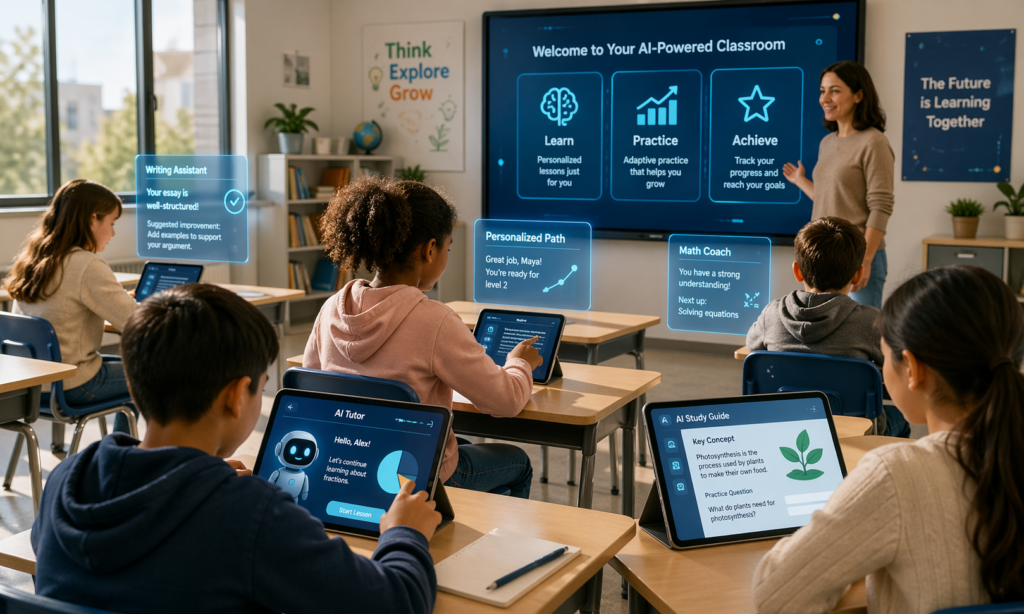
Artificial intelligence, digital transformation, and the evolving career needs are rapidly transforming the education system in 2026. The old conventional models of learning are not enough in this world where skills, flexibility and real time learning are more important than the degrees. The current generation of learners demands adaptable, individualized and result-oriented education that is in tandem with the challenges in the real world. Due to this, the institutions and platforms are also re-engineering the way knowledge is provided, consumed and put into use.
The Emergence of Learning Powered by AI.
- Individualized learning based on the performance of the students.
- AI tutors with real-time assistance and feedback.
- Intelligent assessment and grading systems.
- Predictive analytics to follow up and enhance student performance.
- AI application in conjunction with immersive technologies VR and AR.
Learning like a Person.
AI-powered applications can learn the learning style, rate and strengths of every student to provide customized content. The strategy also does not apply the one-size-fits-all solution and will make sure learners get what they need. This consequently makes the students remain more active, remember more and advance more in their studies.
Smart tutoring Systems.
The virtual tutors are now extremely developed and provide real-time support and explanations. These systems are online and can be used 24/7, changing their approach to teaching according to the reaction of students. This availability at all times renders learning to be more accessible and less reliant on the traditional classroom schedule.
Automated Assessments
Grading AI systems facilitate the grading process by giving fast and objective grading results. They also produce in-depth performance data to enable students and teachers to know their strengths and weaknesses. This will enable focusing on the areas of improvement and academic planning.
Predictive Analytics in Education.
The schools are using data to anticipate student performance and early detect risks. Using patterns, AI can suggest interventions that will keep the students on track and lower the dropout rates, as well as enhance overall success.
AI VR Immersive Learning.
The integration of AI and immersive technologies is changing theoretical learning into the real-world. This is because education becomes more interactive, engaging and impactful as students get the opportunity to learn in virtual labs, historical settings, and real-world simulation.
Education based on Skills.
- Pay attention to practical skills and job-readiness as opposed to theory.
- Expansion of microlearning and short-term certification.
- Good cooperation between the industries and education institutions.
- Heightened role of soft skills such as communication and adaptability.
- Lifelong learning is becoming a necessity to career development.
Nano Degrees and Microlearnings.
Degree programs are being substituted by short and focused learning modules. They are created to impart certain skills within a short period and this makes these courses perfect to students who would require instant career rewards. They are adaptable, cost effective and oriented towards the industry requirements.
Industry-Aligned Curriculum
Schools are liaising with employers to develop pertinent classes. This will make sure that students acquire practical knowledge that can be directly applied to real-life jobs. It also enhances the employability and decreases the disjuncture between education and industry expectation.
Focus on Soft Skills.
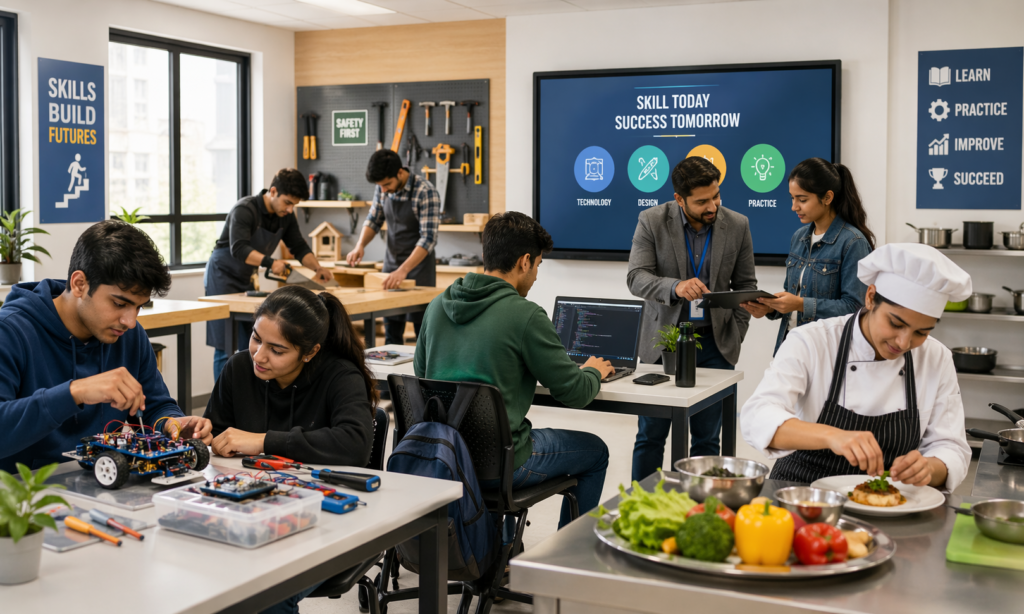
Besides technical skills, soft skills are increasingly becoming important in the workplace. Communication, group work, emotional intelligence, and problem-solving skills are currently the major parts of the education system that students are equipped with to meet the requirements of various work settings.
Hands-On Learning Models.
Live project, case study and internship are increasingly becoming relevant as practical learning methodologies. These strategies enable the students to use theoretical knowledge in practice so that they can increase their knowledge and confidence.
Never-ending Skill Upgrading.
Learning is not a notion that is restricted to schooling. Online courses and certifications help professionals constantly refresh their skills, keeping up with the rapidly evolving job market.
The Future Lifelong Learning.
By 2026, lifelong learning will be an integral aspect of individual and professional growth due to the pace of change in technology, and changes in the job markets. People are no longer using one degree to support their careers; they constantly keep on updating their skills with flexible courses, online, and through real life experience. The emergence of AI-driven guidance systems, learning groups, and self-directed learning models enables individuals to study whenever they want and be ready to learn new opportunities quickly. This change enables learners to remain relevant, change their careers with ease, and make charge of their development in an extremely competitive and dynamic world environment.
Conclusion
Innovation, flexibility and relevance characterize education in 2026. AI is changing the learning process of students, and education based on skills will help guarantee that students will be ready to deal with the real world. Learning is becoming efficient and accessible due to hybrid models and systems that are driven by data and lifelong learning is becoming a necessity, not a choice. With these trends constantly changing, education will therefore be influenced by individuals who have adopted change, never stop learning, and are open to new possibilities.
Questions and Answers (FAQs).
1. What will AI do to education in 2026?
The use of AI is facilitating individual learning, automating tests, and delivering instant feedback, streamlining the educational process and making it more accessible.
2. What is the reason why skill-based education is gaining significance?
Skill-based learning has become increasingly pertinent to employers seeking to hire individuals with relevant skills and practical experience as opposed to traditional degrees.
3. What is hybrid learning?
Hybrid is a combination of online and offline learning which provides flexibility, and interactive learning.
4. Will the traditional degrees be phased out?
Although still in existence, the traditional degrees are being transformed to incorporate skill-based and practical aspects of learning.
5. What is life long learning?
Lifelong learning can be defined as ongoing education as long as one lives to remain abreast with the dynamic skills and requirements in the career.