
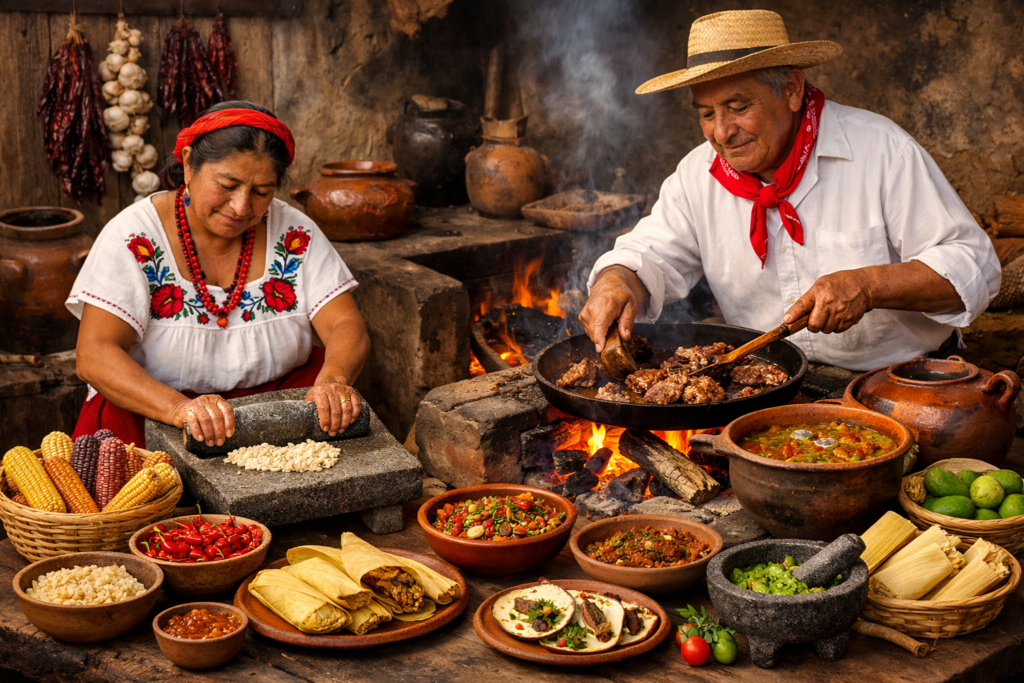
Travel has evolved, nowadays it is not about visiting monuments but about getting into the depth and authenticity of the cultures. Traditional food is one of the most effective means that travelers identify with a place. In the world that is quickly becoming globalized, when cultures are frequently mixed and lose their uniqueness, local cuisines become the keystones to identity, maintaining traditions, narratives, and heritage through time.
Cultural Meaning of Traditional Food.
- Symbolizes tradition and knowledge of the ancestors.
- Captures local climate and farming activities.
- Maintains traditional culinary methods.
- Enhances cultural pride within communities.
- Serves as a living history of traditions.
Food as a Language of the Culture.
Food is a potent language, which is silent but strong and unites people of different cultures. Travelers are able to experience the history, beliefs, and way of life of a region directly and in a sensory manner when they sample genuine food. Food is a vital resource in telling the story of cultures and each recipe holds generations of wisdom.
Emotional and Social Relationship.
Food is a unifying factor in bringing people together, it forms a common experience between the locals and the travelers. Sharing a meal together creates trust, comprehension, and feelings. Such experiences frequently turn out to be the most significant experience of any adventure that enhances the cultural connection between the two groups of people.
Opposition to Cultural Homogenization.
In the modern globalized environment of fast-food restaurants and uniform menus, traditional cuisine is very important in maintaining uniqueness. It serves as a cultural barrier, which preserves local identity and makes sure that the local traditions are not lost during the modernization process.
Food as a Travel Trend.
- Tourists like local food experiences as compared to global brands.
- Home-cooked meals and street food are on the rise.
- Food festivals are international events.
- Cooking lessons are a form of cultural learning.
- Social media promotes curiosity about local special dishes.
Rise of Culinary Tourism

Culinary tourism is a contemporary travel trend that has gained significant strength. Tourists are now making arrangements to visit a specific destination just to sample local food, markets and cooking cultures. This change is marked by an increasing inclination towards experiencing adventurous travel as opposed to traditional sightseeing.
Social Media influence.
The social media sites have turned the conventional dishes into international cuisines. One viral video/post can popularize a local dish to millions of people. This online exposure not only boosts tourism, but also assists in preserving and glorifying local cuisines.
Local Economies Support.
Selection of traditional food has a direct positive impact on the communities. It assists farmers, small vendors and family-run businesses, so that traditional practices can be economically viable. This forms a sustainable loop of culture and livelihood developing simultaneously.
The Traditional Preservation of Local Identity through Traditional Food.
Major How Traditional Food Preserves Cultural Identity.
- Secures native crops and agriculture.
- Conserves old recipes through generations.
- Promotes young people to re-establish contact with the past.
- Encourages narration using local food.
- Retains individuality in a globalized world.
Transmission of Knowledge.
In most cases, traditional recipes are taught in families orally and by example. This intergenerational interaction has seen to it that cultural knowledge is never lost. It is also empowering identity since it links the young generations to their origins and their heritage.
Recovery of Lost Dishes.
Several areas are in the process of rediscovering old and lost recipes. This restoration is not only useful in preserving cultural heritage but also draws a tourist who wants to have a rare and authentic experience. It strengthens the sense of pride in locals and preserves culinary traditions.
Identity Through Ingredients
Local geography and climate are closely connected to local ingredients. They are used to define the authenticity of traditional cuisine. By keeping these ingredients and farming practices, communities have remained close to the land and their culture.
The Problems of Traditional Food in Contemporary Travel.
Key obstacles to the preservation of traditional food.
- Local dishes are overshadowed by global fast-food chains.
- Traditional ingredients are restricted by urbanization.
- Alteration of lifestyles lowers the interest in heritage foods.
- Authentic recipes are distorted by commercialization.
- Agriculture in the area is affected by climate change.
Striking a balance between Authenticity and Commercialization.
With the growth of tourism, local cuisines are at times adapted to the international preferences. Although it may enhance the accessibility of food, it threatens to lose authenticity. It is necessary to find the way to balance between the need to preserve original flavors and to adapt to modern requirements.
Sustainability Concerns
There are environmental issues impacting the traditional food systems. The traditional farming practices are not easily found to be maintained due to climate change, soil degradation and scarcity of resources. There is a need to adopt sustainable practices that will safeguard food and culture.
The Future of Traditional Food in Travel.
New Developments in Culinary Travel.
- Expansion of agricultural tourism.
- Concentrate on green and local sourcing.
- Electronic conservation of recipes and methods.
- Support of culinary heritage by the government.
- Growing demand for immersive travel experiences.
Technology/Cultural Preservation.
Technology is playing a key role in documenting and sharing traditional food practices. The use of online platforms, videos and digital archives makes sure that recipes and techniques are available to the future generation and also get to a worldwide audience.
Community-Led Tourism
A trend of local communities taking the lead in tourism initiatives is emerging, including authentic food experiences including home dining and cooking workshops. This will not only maintain the cultural identity but also make sure that economic gains remain in the community.
Conclusion
Food has been not a mere element of travelling but the soul of culture. Local cuisines are the strong reminders of the past in a time when globalization tends to adopt a homogeneous nature. Travelers can help to sustain cultural diversity by having and encouraging the traditional food, which also enhances their own experiences. Authenticity is the future of meaningful traveling and traditional food will remain crucial in preserving the cultures of generations to come.
FAQs
1. What is the importance of traditional food during travelling?
Traditional food enables the travelers to get a feel of the culture, history and the way of life in the destination in a natural manner.
2. What is culinary tourism?
Culinary tourism emphasizes local cuisine, cooking culture and local dining.
3. What is the preservation of culture by traditional food?
It preserves recipes, ingredients and cooking methods, which are intergenerational.
4. What are the challenges with traditional cuisine?
Its survival is endangered by globalization, environmental problems, and lifestyle changes.
5. What can travelers do to help with traditional food?
It can be done by selecting local restaurants, spending money in small local shops, and experiencing cultural food tourism.
